





Compression Behavior
- Excellent plastic deformation supports strong interparticle bonding.
- Builds hardness efficiently at moderate compression forces.
- Typically improves robustness and handling durability.

Contact us
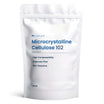
If you have a question, require bulk pricing or would like more details about Microcrystalline Cellulose 102 (MCC 102), please complete the form and we will be in touch shortly.

Microcrystalline Cellulose is widely regarded as an excellent binding agent in solid dose manufacturing. It earns that reputation by offering strong compressibility, reliable flow, and a non-reactive profile that works predictably across a wide range of formulations. In practice, this translates to tablets that compress cleanly, maintain consistent weights, and perform predictably at scale, which is why Microcrystalline Cellulose is so commonly used across nutraceutical, supplement, and food manufacturing.
Beyond its performance as a binding agent, Microcrystalline Cellulose also functions exceptionally well as a bulking agent and filler. Because it is chemically inert, it can be used at meaningful inclusion levels without interfering with active ingredients or other formulation components. Its disintegration behavior is well balanced, supporting tablet integrity while still allowing tablets to break apart efficiently in liquid, ensuring it does not delay the release of the active ingredient once in use. Outside of tablet and capsule manufacturing, MCC is also used in food production as a texturizer and anti-caking agent. It is completely safe to consume, non-caloric, and commonly used as a source of dietary fiber.
These are the key benefits from Microcrystalline Cellulose 102:
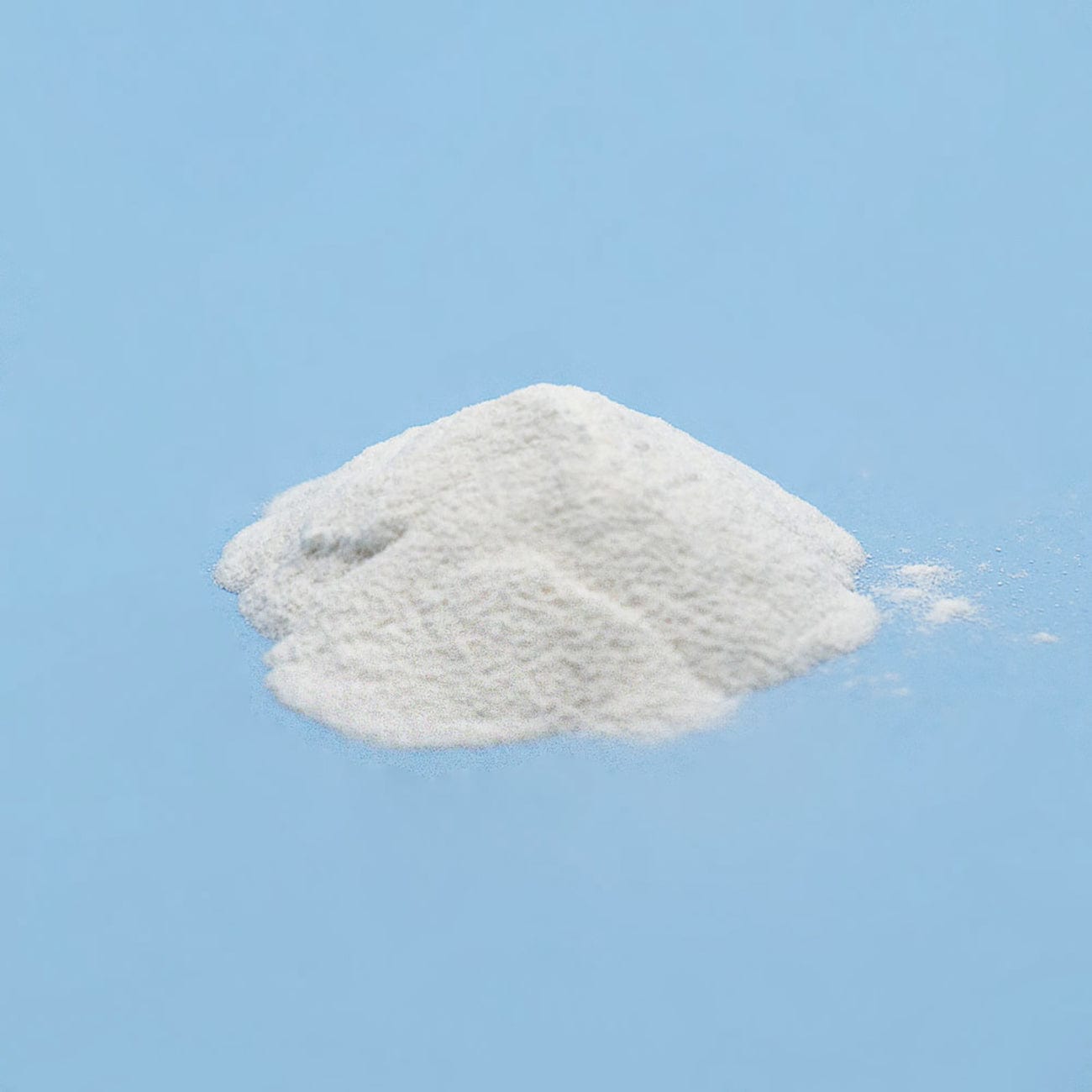
All grades of Microcrystalline Cellulose begin as purified, plant-based cellulose that is carefully processed to enhance its functional performance. The point where MCC 101 and MCC 102 diverge is during final processing. At this stage, particle size and bulk density are adjusted, resulting in MCC 101 and MCC 102 having different flow and compression characteristics.
MCC 101 has a finer average particle size of around 68 microns and a slightly lower bulk density of approximately 0.27 g/mL. These characteristics contribute to strong compressibility and cohesion, making it commonly used in granulation processes as well as applications where binding performance is the primary focus.
MCC 102 features a slightly larger average particle size of around 110 microns and a higher bulk density of approximately 0.31 g/mL. Together, these properties support more consistent powder flow and die filling during processing, making it well-balanced for direct compression.
Below is a practical, in-use view of how MCC 102 typically behaves in direct compression blends, focusing on real-world performance rather than theory. By highlighting compression response, flow characteristics, lubrication compatibility, and disintegration behavior, it’s intended to help you quickly understand where MCC 102 performs well, what to expect at the press, and which variables are most useful to fine-tune during formulation development.
Microcrystalline Cellulose integrates easily into a wide range of formulations and is highly compatible with most commonly used excipients. It pairs well with binders such as copovidone, disintegrants like croscarmellose sodium or crospovidone, and lubricants including sodium stearyl fumarate or magnesium stearate. MCC is also frequently combined with fillers such as dextrates, lactose, or mannitol to fine-tune flow, compressibility, and tablet feel, making it a flexible foundation for both direct compression and granulated blends.
Microcrystalline Cellulose is best suited for swallowable tablet formulations due to its strong binding efficiency and high compressibility, which promote durable tablet structure and controlled disintegration. These properties help tablets maintain hardness, resist chipping, and perform reliably during handling and packaging.
In chewable and fast-dissolving applications, MCC is less commonly used because its low solubility and strong compaction can result in a firmer, chalky mouthfeel and slower breakup unless paired with highly soluble fillers or specialized disintegrants.
Microcrystalline Cellulose compresses readily and can produce very strong tablets, so compression force and disintegrant levels should be adjusted to achieve the desired disintegration profile. In faster-dissolving or chewable formats, it is commonly paired with more soluble fillers or additional disintegrants to improve breakup and texture. Lubricant choice and blending time should also be optimized to maintain flow and ejection without compromising tablet integrity.
| Specification | MCC 101 | MCC 102 |
|---|---|---|
| CAS number | 9004-34-6 | 9004-34-6 |
| Molecular formula | (C₆H₁₀O₅)ₙ | (C₆H₁₀O₅)ₙ |
| Appearance | Fine white powder | Fine white powder |
| Physical state | Solid | Solid |
| Average particle size (µm) | ~68 | ~112 |
| Bulk density (g/mL) | 0.27 | 0.31 |
| Loss on drying | ≤ 5.0% | ≤ 5.0% |
| pH | 5.0 – 7.5 | 5.0 – 7.5 |
| Solubility | Not water soluble | Not water soluble |
| Solubility in water | Practically insoluble; disperses uniformly | Practically insoluble; disperses uniformly |
| Regulatory status | Ph. Eur., NF, JP, ChP, E460(i), FCC | Ph. Eur., NF, JP, ChP, E460(i), FCC |
| Storage | Room temperature, dry conditions | Room temperature, dry conditions |
| Packaging | 1 kg, 5 kg, 20 kg bags | 1 kg, 5 kg, 20 kg bags |
Microcrystalline Cellulose is widely regarded as an excellent binding agent in solid dose manufacturing. It earns that reputation by offering strong compressibility, reliable flow, and a non-reactive profile that works predictably across a wide range of formulations. In practice, this translates to tablets that compress cleanly, maintain consistent weights, and perform predictably at scale, which is why Microcrystalline Cellulose is so commonly used across nutraceutical, supplement, and food manufacturing.
Beyond its performance as a binding agent, Microcrystalline Cellulose also functions exceptionally well as a bulking agent and filler. Because it is chemically inert, it can be used at meaningful inclusion levels without interfering with active ingredients or other formulation components. Its disintegration behavior is well balanced, supporting tablet integrity while still allowing tablets to break apart efficiently in liquid, ensuring it does not delay the release of the active ingredient once in use. Outside of tablet and capsule manufacturing, MCC is also used in food production as a texturizer and anti-caking agent. It is completely safe to consume, non-caloric, and commonly used as a source of dietary fiber.
These are the key benefits from Microcrystalline Cellulose 102:
All grades of Microcrystalline Cellulose begin as purified, plant-based cellulose that is carefully processed to enhance its functional performance. The point where MCC 101 and MCC 102 diverge is during final processing. At this stage, particle size and bulk density are adjusted, resulting in MCC 101 and MCC 102 having different flow and compression characteristics.
MCC 101 has a finer average particle size of around 68 microns and a slightly lower bulk density of approximately 0.27 g/mL. These characteristics contribute to strong compressibility and cohesion, making it commonly used in granulation processes as well as applications where binding performance is the primary focus.
MCC 102 features a slightly larger average particle size of around 110 microns and a higher bulk density of approximately 0.31 g/mL. Together, these properties support more consistent powder flow and die filling during processing, making it well-balanced for direct compression.
Below is a practical, in-use view of how MCC 102 typically behaves in direct compression blends, focusing on real-world performance rather than theory. By highlighting compression response, flow characteristics, lubrication compatibility, and disintegration behavior, it’s intended to help you quickly understand where MCC 102 performs well, what to expect at the press, and which variables are most useful to fine-tune during formulation development.
Microcrystalline Cellulose integrates easily into a wide range of formulations and is highly compatible with most commonly used excipients. It pairs well with binders such as copovidone, disintegrants like croscarmellose sodium or crospovidone, and lubricants including sodium stearyl fumarate or magnesium stearate. MCC is also frequently combined with fillers such as dextrates, lactose, or mannitol to fine-tune flow, compressibility, and tablet feel, making it a flexible foundation for both direct compression and granulated blends.
Microcrystalline Cellulose is best suited for swallowable tablet formulations due to its strong binding efficiency and high compressibility, which promote durable tablet structure and controlled disintegration. These properties help tablets maintain hardness, resist chipping, and perform reliably during handling and packaging.
In chewable and fast-dissolving applications, MCC is less commonly used because its low solubility and strong compaction can result in a firmer, chalky mouthfeel and slower breakup unless paired with highly soluble fillers or specialized disintegrants.
Microcrystalline Cellulose compresses readily and can produce very strong tablets, so compression force and disintegrant levels should be adjusted to achieve the desired disintegration profile. In faster-dissolving or chewable formats, it is commonly paired with more soluble fillers or additional disintegrants to improve breakup and texture. Lubricant choice and blending time should also be optimized to maintain flow and ejection without compromising tablet integrity.
| Specification | MCC 101 | MCC 102 |
|---|---|---|
| CAS number | 9004-34-6 | 9004-34-6 |
| Molecular formula | (C₆H₁₀O₅)ₙ | (C₆H₁₀O₅)ₙ |
| Appearance | Fine white powder | Fine white powder |
| Physical state | Solid | Solid |
| Average particle size (µm) | ~68 | ~112 |
| Bulk density (g/mL) | 0.27 | 0.31 |
| Loss on drying | ≤ 5.0% | ≤ 5.0% |
| pH | 5.0 – 7.5 | 5.0 – 7.5 |
| Solubility | Not water soluble | Not water soluble |
| Solubility in water | Practically insoluble; disperses uniformly | Practically insoluble; disperses uniformly |
| Regulatory status | Ph. Eur., NF, JP, ChP, E460(i), FCC | Ph. Eur., NF, JP, ChP, E460(i), FCC |
| Storage | Room temperature, dry conditions | Room temperature, dry conditions |
| Packaging | 1 kg, 5 kg, 20 kg bags | 1 kg, 5 kg, 20 kg bags |
Magnesium Stearate vs. Sodium Stearyl Fumarate: Key Differences and When to Use Each in Tablet Formulations Formulating nutraceuticals, supplements, or multivitamins involves a thoughtful selection...

How to Make Fully Dissolvable Tablets
Achieving fully dissolvable tablets requires the right balance of excipients, compression techniques, and dissolution testing. This guide explores key factors like binders, disintegrants, and fille...

A Beginner's Guide to Making Your Own Tablets at Home
Learn how to make your own nutraceutical, supplement, and multivitamin tablets at home with this step-by-step guide. Discover the right tablet press, essential tools, and expert tips to create high...