
Compression Behavior
- Enhances particle bonding during compression, improving overall cohesion.
- Achieves higher hardness without increasing compression force.
Contact us
If you have a question, require bulk pricing or would like more details about Copovidone USP, please complete the form and we will be in touch shortly.

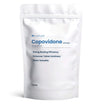
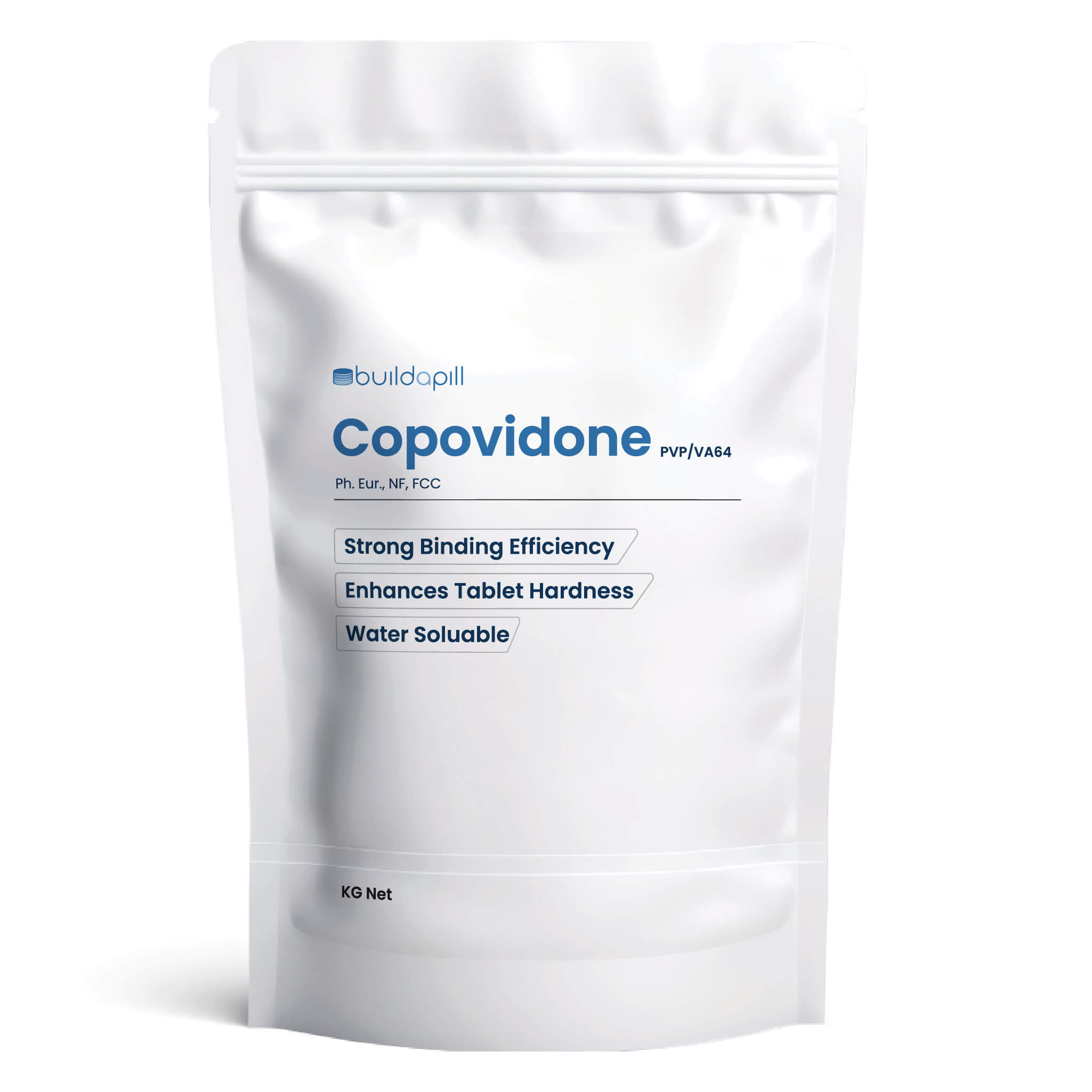
Copovidone (PVP/VA 64) is a highly effective tablet binder used to strengthen tablets for all processing technologies (direct compression, wet and dry granulation, HME). It helps powders lock together under pressure, creating tablets that are firm, smooth, and resistant to breaking, all without needing large amounts in your formula. Because it performs well at low percentages (>10%), it allows you to maintain space for your active ingredients while still achieving reliable tablet integrity.
Copovidone improves hardness, reduces edge chipping, and helps prevent common compression issues like capping or lamination. It blends easily with materials such as MCC, DCP, and other common fillers, making it a dependable choice for a wide range of formulations. When you want strong, consistent tablets without adding extra processing steps, copovidone offers a simple and efficient solution.
These are the key benefits of Copovidone in direct compression blends:
While copovidone is well known for direct compression, it is also widely used in wet granulation. When dissolved in water or alcohol, it forms a strong binding solution that helps create dense, uniform granules that compress smoothly and hold together under pressure. This makes it a practical option for manufacturers who switch between direct compression and granulation depending on the formula.
It’s also commonly used in chewables, film-coated tablets, and other specialty formats where structure and durability matter. If a blend feels brittle, dusty, or prone to capping, copovidone is often a great choice that brings stability back into the system. Because it performs reliably across different processes, many formulators keep it as a core binder in their excipient lineup.
In addition to its processing flexibility, copovidone is a fully synthetic material and does not contain animal-derived ingredients. It is free from common allergens such as gluten, dairy, soy, and nuts, making it suitable for vegan and vegetarian formulations. Because it is not sourced from animal materials, it can also support halal and kosher manufacturing requirements when handled within compliant facilities.
Below is a practical, in-use view of how Copovidone typically behaves in direct compression blends, focused on real press behavior. The notes highlight compaction response, flow impact, lubrication interactions, and disintegration considerations so you can predict performance and tune variables quickly.
| Parameter | Specification |
|---|---|
| Product | Copovidone (PVP/VA 64) |
| CAS number | 25086-89-9 |
| Molecular formula | (C₆H₉NO)ₙ · (C₄H₆O₂)ₘ |
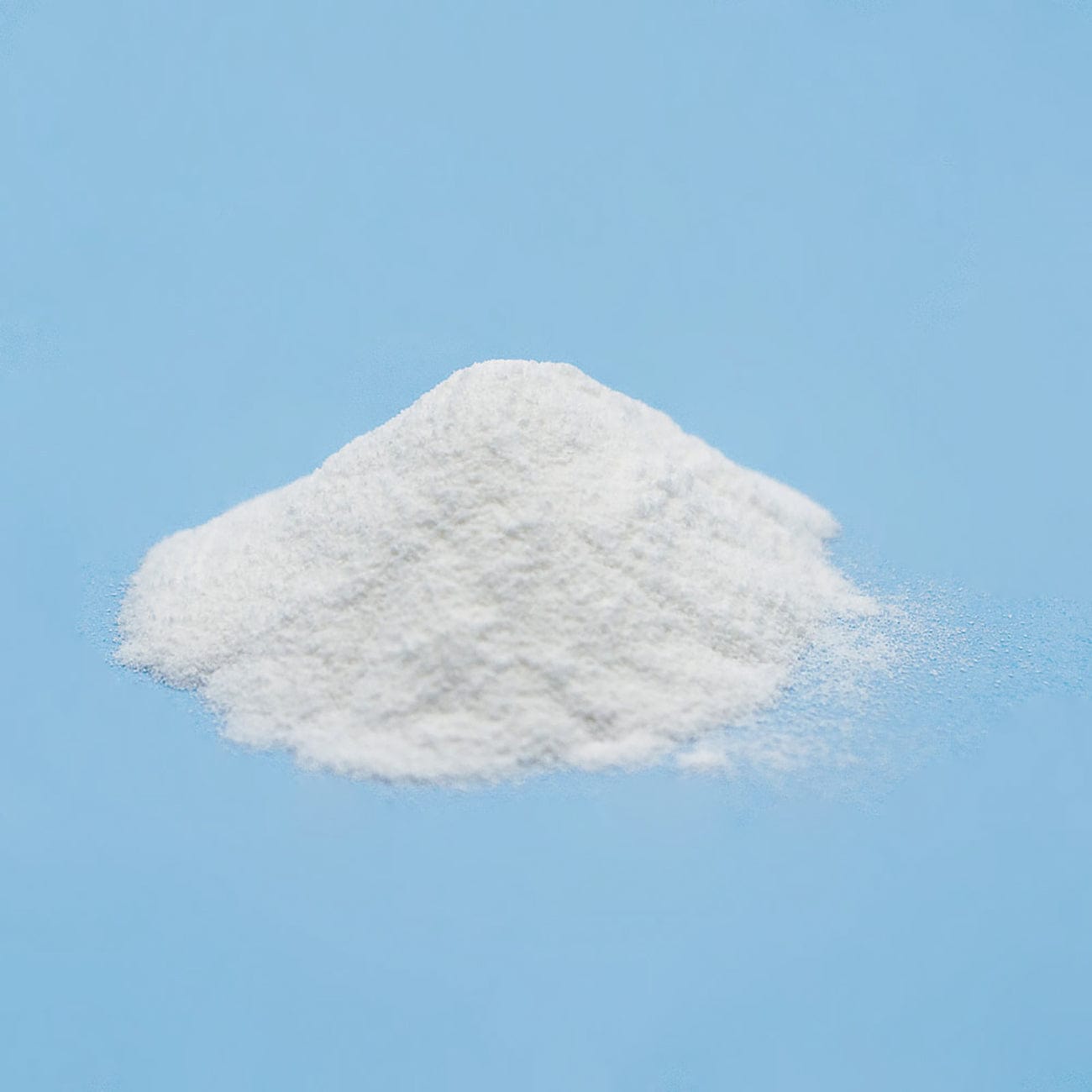
| Appearance | White to off-white hygroscopic powder |
| Physical state | Solid |
| Bulk density (g/mL) | 0.2 – 0.3 g/mL |
| Loss on drying | ≤ 5.0% |
| pH (1% solution) | 3.0 – 7.0 |
| Solubility | Freely soluble in water and ethanol |
| K-Value | 25.2 – 30.6 |
| Vinyl acetate content | 35.3 – 41.4% |
| Peroxide (as H₂O₂) | ≤ 400 ppm |
| Regulatory status | Ph. Eur., USP/NF, JPE, FCC, ChP, E1208 |
| Storage | Room temperature; protect from heat and moisture |
| Packaging | 1 kg, 5 kg, 20 kg bags |
Copovidone (PVP/VA 64) is a highly effective tablet binder used to strengthen tablets for all processing technologies (direct compression, wet and dry granulation, HME). It helps powders lock together under pressure, creating tablets that are firm, smooth, and resistant to breaking, all without needing large amounts in your formula. Because it performs well at low percentages (>10%), it allows you to maintain space for your active ingredients while still achieving reliable tablet integrity.
Copovidone improves hardness, reduces edge chipping, and helps prevent common compression issues like capping or lamination. It blends easily with materials such as MCC, DCP, and other common fillers, making it a dependable choice for a wide range of formulations. When you want strong, consistent tablets without adding extra processing steps, copovidone offers a simple and efficient solution.
These are the key benefits of Copovidone in direct compression blends:
While copovidone is well known for direct compression, it is also widely used in wet granulation. When dissolved in water or alcohol, it forms a strong binding solution that helps create dense, uniform granules that compress smoothly and hold together under pressure. This makes it a practical option for manufacturers who switch between direct compression and granulation depending on the formula.
It’s also commonly used in chewables, film-coated tablets, and other specialty formats where structure and durability matter. If a blend feels brittle, dusty, or prone to capping, copovidone is often a great choice that brings stability back into the system. Because it performs reliably across different processes, many formulators keep it as a core binder in their excipient lineup.
In addition to its processing flexibility, copovidone is a fully synthetic material and does not contain animal-derived ingredients. It is free from common allergens such as gluten, dairy, soy, and nuts, making it suitable for vegan and vegetarian formulations. Because it is not sourced from animal materials, it can also support halal and kosher manufacturing requirements when handled within compliant facilities.
Below is a practical, in-use view of how Copovidone typically behaves in direct compression blends, focused on real press behavior. The notes highlight compaction response, flow impact, lubrication interactions, and disintegration considerations so you can predict performance and tune variables quickly.
| Parameter | Specification |
|---|---|
| Product | Copovidone (PVP/VA 64) |
| CAS number | 25086-89-9 |
| Molecular formula | (C₆H₉NO)ₙ · (C₄H₆O₂)ₘ |
| Appearance | White to off-white hygroscopic powder |
| Physical state | Solid |
| Bulk density (g/mL) | 0.2 – 0.3 g/mL |
| Loss on drying | ≤ 5.0% |
| pH (1% solution) | 3.0 – 7.0 |
| Solubility | Freely soluble in water and ethanol |
| K-Value | 25.2 – 30.6 |
| Vinyl acetate content | 35.3 – 41.4% |
| Peroxide (as H₂O₂) | ≤ 400 ppm |
| Regulatory status | Ph. Eur., USP/NF, JPE, FCC, ChP, E1208 |
| Storage | Room temperature; protect from heat and moisture |
| Packaging | 1 kg, 5 kg, 20 kg bags |
Magnesium Stearate vs. Sodium Stearyl Fumarate: Key Differences and When to Use Each in Tablet Formulations Formulating nutraceuticals, supplements, or multivitamins involves a thoughtful selection...

How to Make Fully Dissolvable Tablets
Achieving fully dissolvable tablets requires the right balance of excipients, compression techniques, and dissolution testing. This guide explores key factors like binders, disintegrants, and fille...
A Beginner's Guide to Making Your Own Tablets at Home
Learn how to make your own nutraceutical, supplement, and multivitamin tablets at home with this step-by-step guide. Discover the right tablet press, essential tools, and expert tips to create high...